A pitch shifter plugin moves a sound up or down in pitch without changing its length. On vocals, that one job turns into many: fixing a take that sits a semitone off, building an octave double under a hook, turning a voice into a deep villain or a tiny cartoon, or creating a new character for an ad-lib. This guide explains what to look for in a pitch shifter for vocals, how the different types of tools compare, and where each TuneDrip plugin fits.
What a pitch shifter does to a voice
Every sung or spoken note has two separate parts. The pitch is the note you hear: C, D, E. The formant is the resonance of the throat and mouth, the thing that makes a voice sound big or small, adult or child, male or female. When a simple pitch shifter moves a voice up an octave, it moves both at once, and the singer turns into a chipmunk. Move it down and both drop, and the voice sounds slow and swollen.
A good pitch shifter for vocals lets you treat the two separately. Keep the formant where it is and change only the note, and the singer still sounds like the singer, just higher or lower. Keep the note and change only the formant, and the melody stays intact while the character of the voice changes completely. That separation is the single most important feature to check.
"Pitch shifter" is often used for tools that do quite different things. Knowing which one you need saves a lot of guesswork.
1. Pitch and formant shifters
These move a whole signal by a fixed amount, in semitones and cents, and usually give a formant control next to it. They are the right tool for octave doubles, character voices, sound design and transposing a take that was recorded in the wrong key. Pivot is this type of pitch shifter plugin: it shifts pitch and formant independently in real time, with four controls, PITCH (semitones up or down), FORMANT (timbre, bigger or smaller), LINK (how much the formant follows the pitch) and MIX (dry and wet blend).
2. Pitch correction
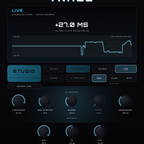
Pitch correction does not move a voice by a fixed interval. It listens to each note and pulls it toward the nearest note of the key. That is the tool for tuning, from a transparent fix to the hard-tuned rap sound. Tune Live corrects a voice in real time with a PSOLA engine that leaves the formants where they are. RETUNE SPEED runs from an instant robot at 0 ms to transparent at 200 ms, FLEX-TUNE leaves slides and blue notes alone, and AUTO KEY can detect the key while you sing.
3. Harmonizers
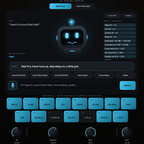
A harmonizer is a pitch shifter that adds new voices instead of moving the original one. The intervals follow the key of the song, so a third above stays a third above, major or minor, as the melody moves. Harmony listens to your lead and builds diatonic harmonies in the key of your song: thirds, fifths, octaves and wider voicings, each with its own level and pan, while keeping the formants of the original singer.
4. Choir and ensemble generators
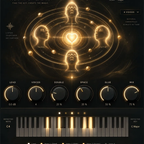
The last step goes beyond a handful of harmony voices. Choir turns a single vocal take into a choir of up to thirty-two singers in four sections that sing real harmonies in the key of the song. Every singer is built from your own voice with its own tuning, timing, vibrato and level, and there are three characters: Gospel, Kids and Gang.
What to look for in a pitch shifter plugin
-
Independent formant control. Without it, any shift of more than a couple of semitones changes the character of the voice. With it, you choose whether the character moves or not.
-
A link between pitch and formant. Fully linked sounds like a tape sped up or slowed down. Fully unlinked keeps the voice natural. Being able to set anything in between gives the most useful range.
-
Real-time processing. If you are going to automate pitch on a hook or play with it while recording, the effect needs to run live on the track, not as an offline render.
-
A dry and wet mix. Blending a shifted copy under the dry voice is how most octave doubles and thick ad-libs are built. A MIX control on the plugin saves an extra send.
-
Behaviour on monophonic sources. Vocal pitch shifters are designed for a single voice. Pivot is tuned for voices and monophonic sources; on chords it becomes a creative effect rather than a clean transposition.
Most DAWs already ship with some form of pitch shifting, and for a quick transposition they are often enough. Logic Pro includes a Pitch Shifter and a Vocal Transformer, FL Studio includes Pitcher and NewTone, and Cubase includes PitchCorrect. Many DAWs also let you transpose an audio clip directly on the timeline. These options are worth trying first for simple jobs.
A dedicated vocal pitch shifter becomes useful when you want the formant and the pitch on separate controls, a link control between them, and the same tool and settings in every DAW you work in. TuneDrip plugins run as VST3 and AU, so a setting you build in one DAW works the same way in another.
Five ways to use a pitch shifter on vocals
Octave double under a hook
Duplicate the lead vocal, or put the pitch shifter on a send. Set PITCH to minus twelve semitones, keep the formant at its original position, and blend the result well under the lead. The hook gains weight without sounding like a second singer. For the stereo spread that usually goes with it, a doubler such as Stack multiplies the same note into a crowd.
Character voices for ad-libs
Ad-libs work best when they sound different from the lead. Shift a short phrase up a few semitones with the formant pushed smaller for a thin, bright voice, or down with the formant bigger for a deep, menacing one. Automate it on and off so only the ad-lib changes.
Changing the timbre, not the note
Keep PITCH at zero and move only FORMANT. The melody stays exactly as sung, but the voice sounds larger or smaller. Small formant moves are a quick way to make two takes by the same singer feel like two different people in a stack.
Transposing a take
If a song changes key after the vocal is recorded, shift the take by the interval you need with LINK set to zero, so the formant stays in place. Moves of one or two semitones usually pass unnoticed; bigger moves are where formant control earns its place.
Sound design
Pitch shifters are not only for vocals. Shift a snare, a vocal chop or a synth stab and automate the PITCH control over a bar to create risers and drops. On chords and full mixes the result becomes an effect rather than a clean transposition, which is often exactly the point.
Where it sits in a vocal chain
For tuned vocals, the order matters. Pitch correction goes first on the track, so it hears the dry take. Character effects like a pitch and formant shift usually come after tuning and before the rest of the chain, or on a parallel send when you want the shifted copy blended under the lead. Harmony and Choir work best on a lead that is already tuned, because they build new voices from the notes they hear.
If you want the rest of the vocal chain ready-made, TuneDrip vocal presets load EQ, compression, saturation, delay and reverb as a finished chain, and the vocal plugins collection groups every TuneDrip tool built for the voice.
- You want to move a voice by a fixed interval, or change its character: a pitch and formant shifter such as Pivot.
- You want the singer in tune, transparently or hard-tuned: pitch correction such as Tune Live.
- You want backing harmonies that follow the key: a harmonizer such as Harmony.
- You want a full ensemble from one take: Choir.
FAQ
What is the difference between a pitch shifter and autotune?
A pitch shifter moves the whole signal by a fixed amount, for example twelve semitones down. Pitch correction, often called autotune, follows each note and pulls it toward the nearest note of the key. They solve different problems and are often used together.
Why does my voice sound like a chipmunk when I shift it up?
Because the formant moved with the pitch. Use a pitch shifter with a separate formant control and keep the formant where it was, or set the link between pitch and formant to zero.
Can I use a pitch shifter on a whole beat?
You can, but vocal pitch shifters are designed for one voice at a time. On chords and full mixes the result is a creative effect rather than a clean transposition.
Which formats do TuneDrip plugins come in?
VST3 and AU, so they load in the DAWs that support those formats, including FL Studio, Ableton Live, Logic Pro, Cubase, Studio One and Reaper.