
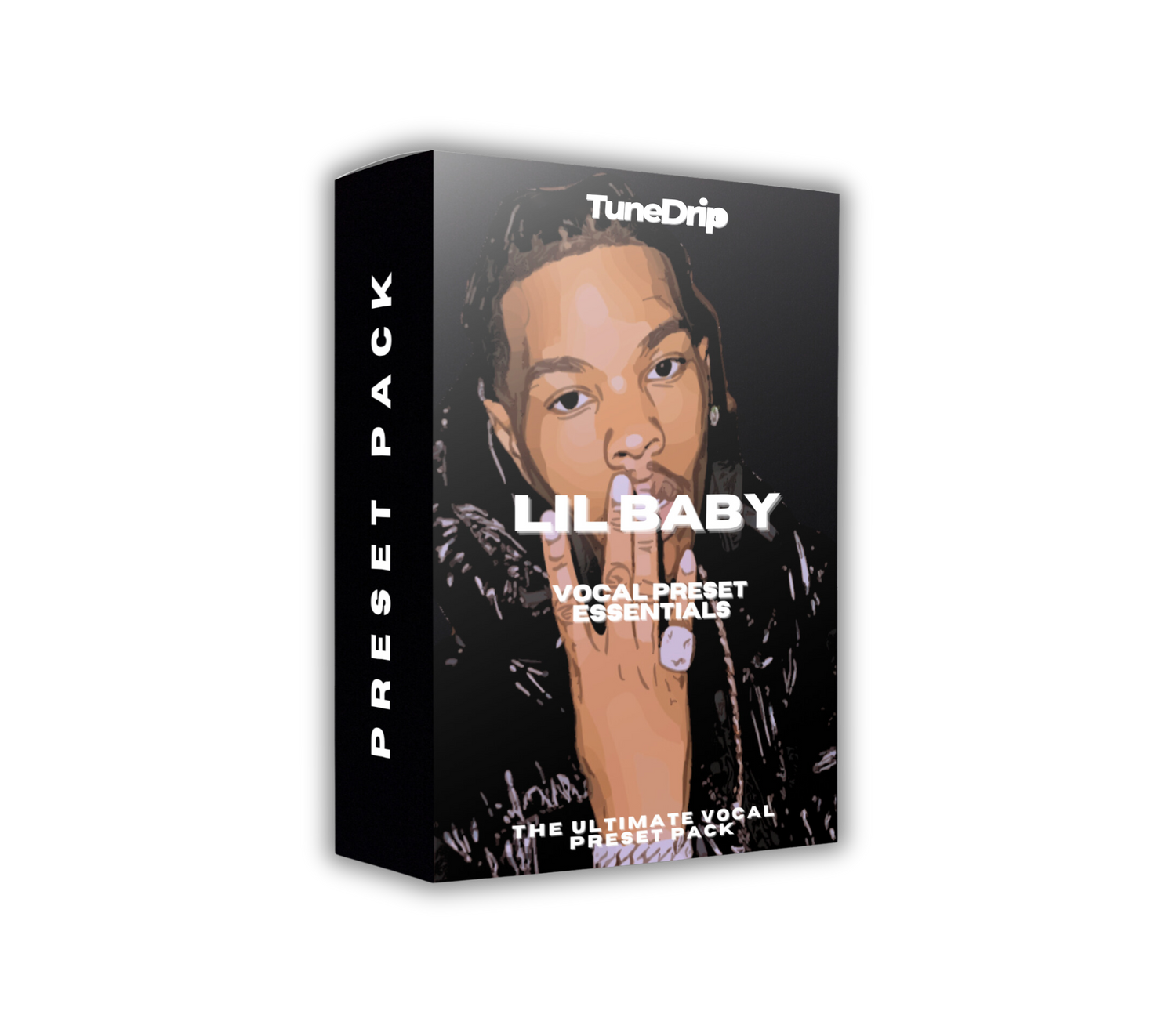
Lil Baby went from barely rapping to becoming one of the biggest names in trap in about two years. And a huge part of that is his vocal sound — this slightly nasally, melodic flow with just enough Auto-Tune to smooth it out without making it sound like a gimmick.
What makes Baby's vocals interesting from a production standpoint is that they're more processed than they sound. His delivery feels natural and effortless, but there's a carefully calibrated chain behind it that makes every bar sit perfectly in the mix.
What Makes Lil Baby's Vocals Work
The Auto-Tune is in the sweet spot. Baby uses pitch correction around 10-18ms retune speed. That's fast enough that you can hear it doing its thing on sustained syllables, but slow enough that his rapid-fire delivery doesn't get chopped up. On tracks like "Emotionally Scarred," where he's more melodic, the Auto-Tune is slightly faster. On hard bars, it's barely doing anything because he's not holding notes long enough for it to matter.
His voice naturally cuts through. Baby has this midrange-heavy tone that sits perfectly in the pocket between the 808s and the hi-hats. His engineers don't have to boost the presence much because it's already there in his natural voice. Most of the EQ work is subtractive — rolling off the low end and taming any harshness around 5kHz.
Compression is tight but not crushing. Think 4:1 ratio, fast-ish attack (8ms), and maybe 4-5dB of gain reduction. Baby's delivery is more consistent than someone like Uzi, so the compressor doesn't have to work as hard. The goal is to keep the vocal sitting at a steady level over those rolling 808 patterns.
Minimal reverb, lots of delay. This is a key difference between Baby's sound and other trap artists. His vocals are pretty dry — there's barely any reverb, which keeps them upfront and aggressive. Instead, there's a filtered delay (usually 1/4 note, mixed low) that adds movement without pushing the vocal back in the mix.
The Chain
- Auto-Tune: 10-18ms retune speed, Humanize at 15-25
- High-pass filter: 90-100Hz
- Compression: 4:1, 8ms attack, auto release. 4-5dB reduction
- De-esser: Moderate at 6kHz
- EQ: Cut at 300Hz (-2dB for clarity), slight boost at 3kHz (+2dB presence)
- Delay: 1/4 note, high-pass filtered at 400Hz, 15% mix
- Reverb: Tiny room, 0.3s decay, barely there — just enough to not sound completely dry
The Preset Pack
- My Turn Energy — The flagship sound: confident, punchy, slightly melodic
- Emotionally Scarred — More melodic, slightly more Auto-Tune, more space
- Drip Too Hard — Aggressive, minimal processing, in-your-face
- Street Gossip Raw — Earlier Baby sound, rawer, less polished
- Plus 6 variations for different tempos and moods
All DAWs: FL Studio, Ableton, Logic Pro and more.
Production Notes
Baby's adlibs are mixed differently from most rappers. Instead of being panned hard left/right, they're often slightly off-center and mixed just barely below the main vocal. It creates this thick, layered feel without being obviously "doubled."
Match the 808 pattern. Baby's vocal pockets are designed around the 808. When the bass hits, his voice dips slightly in volume (sidechain or just mixing). When the 808 stops, his voice fills the space. If your vocals are fighting with your bass, check your levels during the 808 hits.
Get the Lil Baby Vocal Preset Essentials — instant download, works in your DAW.



Leave a comment
This site is protected by hCaptcha and the hCaptcha Privacy Policy and Terms of Service apply.