
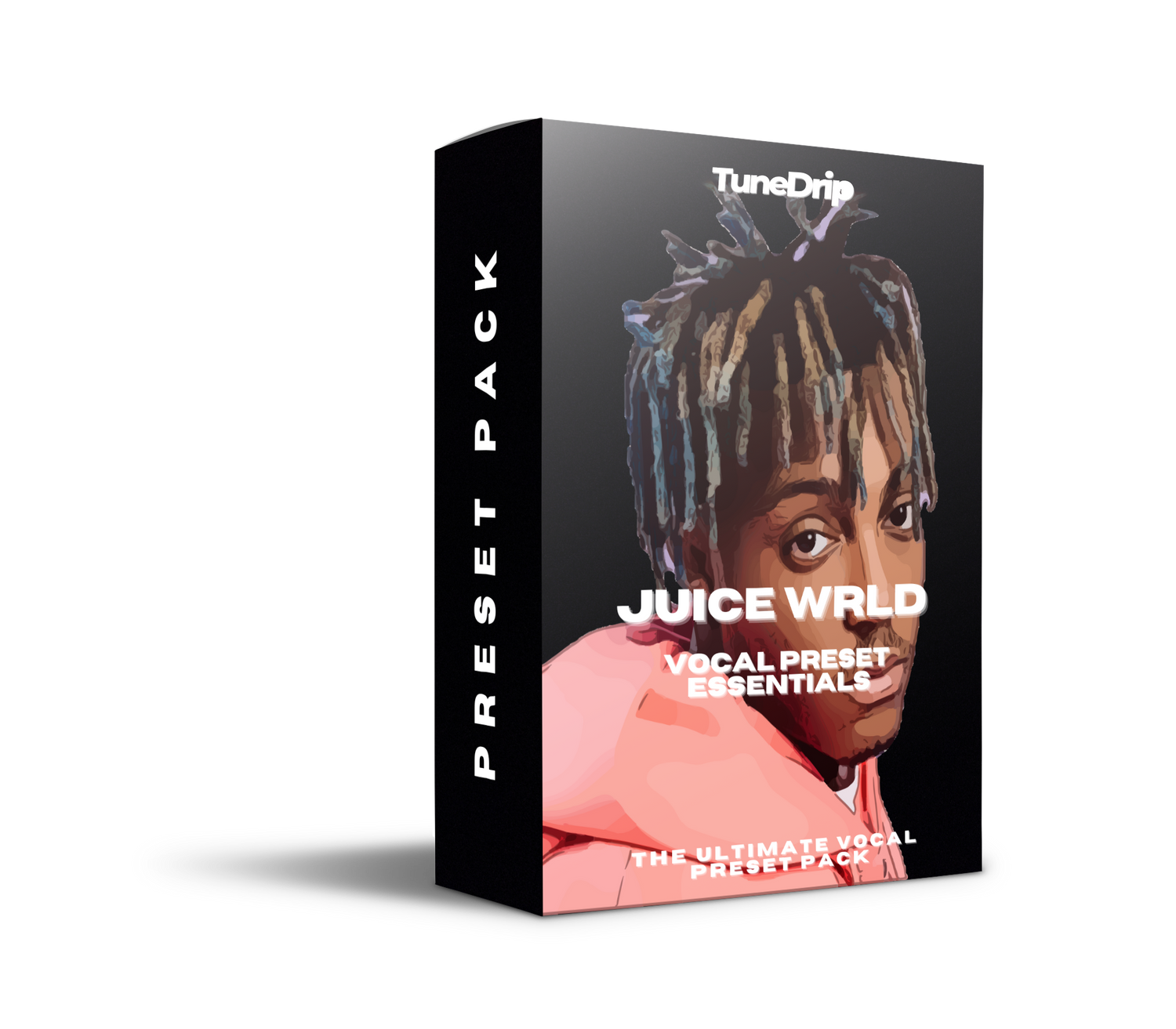
Juice WRLD's vocal production is a case study in controlled chaos. On the surface, his vocals sound casual — almost offhand, like he's freestyling over a beat (which he often was). But the processing chain is carefully constructed to make that effortless quality work in a finished record. Too little processing and it sounds unfinished; too much and you lose the raw energy that made him special.
His sound is heavily influenced by his free-styling approach to recording — he'd often record tracks in one take, one complete freestyle. The vocal chain had to accommodate that energy while making it radio-ready.
The Juice WRLD Vocal Sound — What's Happening Under the Hood
Auto-Tune is dialed in but not robotic. Juice uses Auto-Tune at a retune speed of roughly 10-20ms — faster than transparent but not at the 0-5ms range of hard trap Auto-Tune. This creates a slight pitch-snap effect that adds to the melodic quality of his rap/sing delivery without making it sound like a vocoder. On his more melodic moments, the correction tightens slightly; on his faster rapping sections, it loosens.
The delivery spans rap and singing — and the chain has to handle both. Juice WRLD blurred the line between rapper and singer harder than almost anyone in his era. His vocal chain is designed to work in both modes: enough pitch correction for the singing passages, enough punch for the rap verses. The compression settings are crucial here — medium attack to let vocal transients through on rapped lines, but enough sustain to support the melodic lines.
Reverb creates an emotional space. Juice's tracks have a melancholy, introspective quality, and the reverb is part of that. Medium room or plate reverb, 1.2-1.8 second decay, mixed at 20-25%. Not so much that it's washy, but enough to give the vocal a sense of space and emotional resonance.
Doubles and ad-libs are central. Juice WRLD tracks are dense with ad-libs, doubles, and background vocal layers. The main vocal sits up front, clear and dry. The doubles are slightly more processed and pushed back in the mix. Ad-libs get more reverb and sometimes more aggressive pitch correction, creating contrast with the lead.
The Chain
- Auto-Tune: 10-20ms retune speed, Humanize at 20-30. Melodic but human.
- Compression: 3:1-4:1, medium attack (5-8ms), medium release (50-80ms). Punch + sustain.
- EQ: High-pass at 100Hz, cut at 200-250Hz (-2dB), boost at 2.5-3.5kHz (+2dB presence), gentle air at 12kHz (+1.5dB)
- De-esser: Moderate at 6-7kHz. Control harshness without losing intelligibility.
- Saturation: Light tape saturation for warmth and character
- Reverb: Room or plate, 1.2-1.8s decay, 20-30ms predelay, 20-25% mix
- Delay: 1/8 note or 1/4, heavily filtered, 15% mix for width and energy
The Presets
- Lucid Dreams Melodic — The signature emotional emo-rap sound: melodic Auto-Tune, lush reverb
- Legends Rap — More punch for straight rap flows, tighter compression
- All Girls Are the Same Emo — Peak emotional resonance: more reverb, slower compression
- Righteous Hard — Aggressive mode: more saturation, faster attack, harder Auto-Tune
- Plus 6 variations covering different energy levels and tempos
Compatible with FL Studio, Ableton, Logic Pro, and all major DAWs.
How to Record Juice WRLD-Style Vocals
Record spontaneously. Juice WRLD's greatest sessions were often freestyles recorded on the first take. The energy of an unrehearsed performance — the slight hesitations, the momentum of a thought completing in real time — is part of the aesthetic. Don't over-rehearse. Set up the chain, hit record, and flow.
Layer your vocal world. A finished Juice WRLD-style track should have: the main vocal, a tight double (slightly different inflection), ad-libs at key moments, and background harmonies on hook sections. Build the vocal arrangement — not just the lead.
Let the emotion through. Juice's appeal was emotional authenticity. Listeners could feel the genuine pain, excitement, or introspection in his delivery. The processing chain can help, but it can't manufacture feeling that isn't there in the performance. Sing like you mean it.
Tempo rides between rap and melody. Practice switching smoothly between rapping and singing mid-verse. Juice was exceptional at this transition. The Auto-Tune setting handles the melodic parts — your delivery skill handles the transition.
Get the Juice WRLD Vocal Preset — built for the melodic rap/emo-rap lane he pioneered. Check our vocal presets guide for more artist breakdowns.
FAQ
What Auto-Tune settings does Juice WRLD use?
Juice WRLD's Auto-Tune sits in the 10-20ms retune speed range — noticeable but not robotic. Humanize is set moderate (20-30) to preserve some natural pitch variance. The key is that it supports his melodic delivery without turning it into a hard trap Auto-Tune effect.
How do I make my vocals sound like Juice WRLD's emo rap style?
Three things: melodic Auto-Tune (not hard, not transparent), medium room reverb (20-25% mix, 1.2-1.8s decay), and emotional delivery. The technical chain creates the texture; the emotional authenticity in the performance creates the impact. The preset handles the processing — you handle the feeling.
Does this preset work for the modern "emo rap" or "SoundCloud rap" sound?
Yes. The Juice WRLD sound became the template for an entire generation of artists — Lil Tecca, Rod Wave, NoCap, and many others follow a similar processing approach. These presets cover that full genre space.
Can this preset be used for hooks only, with a different sound for verses?
Absolutely. Many producers use the "Lucid Dreams Melodic" variant specifically for chorus sections and hooks where melodic delivery is prominent, then switch to a less-processed rap vocal chain for verses. The preset pack includes variants that serve both modes.
Ready to get Juice WRLD's exact sound in your productions? Download the Juice WRLD Vocal Preset Essentials — available for FL Studio, Logic Pro X, Ableton Live, Pro Tools, GarageBand, and more.




Leave a comment
This site is protected by hCaptcha and the hCaptcha Privacy Policy and Terms of Service apply.