
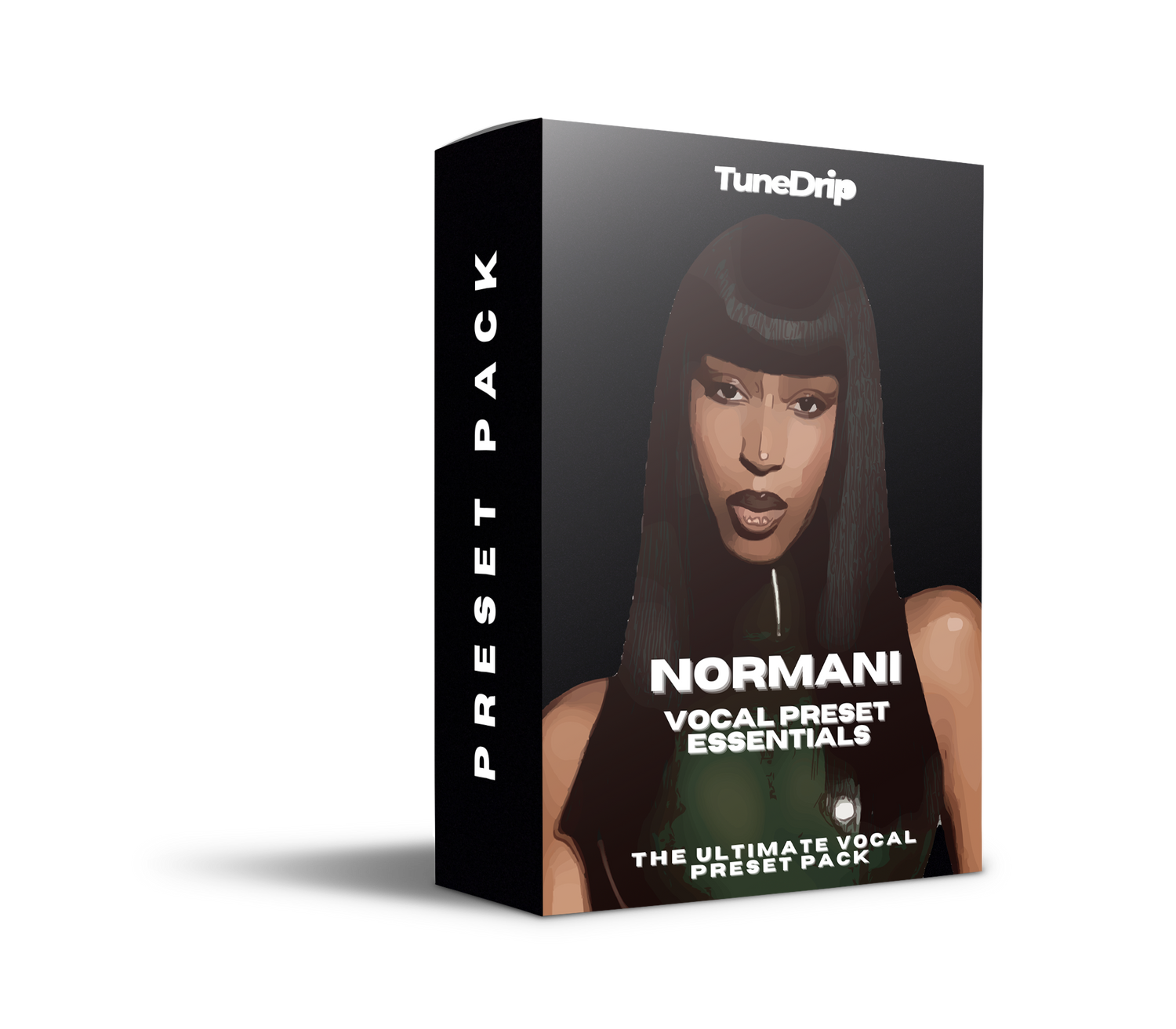
Olivia Rodrigo Vocal Preset — The Raw Indie-Pop Chain Decoded
Olivia Rodrigo built her career on a paradox: vocals that sound unpolished but are precisely engineered. From the intimate piano-and-voice of drivers license to the distorted pop-punk of brutal and the raw emotional power of vampire, her vocal processing serves the emotion first — not the other way around. The result is a sound that feels authentic and relatable even at arena scale. This guide breaks down her full vocal chain and shows you how to replicate it using the TuneDrip Olivia Rodrigo Vocal Preset.
The Olivia Rodrigo Sound: What You're Actually Hearing
Her vocal production philosophy is "emotional transparency first." That means:
- Minimal pitch correction visible processing — Rodrigo intentionally keeps pitch correction nearly transparent (50ms+ retune speed on ballads). The slight natural pitch variation is part of the aesthetic — it communicates vulnerability.
- Forward mid-range presence — Her voice sits in the 1–3kHz range with presence and edge. It's never smoothed-out or polished into a pop sheen. The rawness is the design.
- Genre-appropriate reverb — Ballads get intimate room reverb (1–1.5s). Pop-punk tracks (brutal, good 4 u) get almost zero reverb — dry, close, confrontational.
The overarching rule: if a processing choice makes the emotion feel more distant, it's wrong for this style.
Olivia Rodrigo Vocal Chain Breakdown
Step 1 — EQ (Pre-Compression)
High-pass filter at 90Hz. Her voice has minimal low-end weight — cutting here keeps things clean without losing warmth. Then: a gentle dip at 300–400Hz (-1.5dB, medium Q) to remove the boxiness that bedroom recording spaces introduce. This is the most critical step — without it, the vocal sounds like a demo even with perfect processing downstream.
Add a slight boost at 2–3kHz (+1.5dB, wide Q) for the characteristic forward, "in-your-face" indie presence. This is what makes her vocals cut through distorted guitars on pop-punk tracks without needing to be pushed aggressively in the mix.
Step 2 — Pitch Correction
This is where Rodrigo's approach diverges most from modern pop:
- Ballads (drivers license, traitor, vampire): 50–80ms retune speed. The pitch correction smooths only gross errors — intentional slides, cracks, and breaks are preserved. This is what makes her delivery sound emotional and human.
- Pop-punk (brutal, good 4 u, bad idea right?): 25–35ms. Tighter, but still not "Auto-Tune pop." The energy of these tracks demands a more controlled delivery that sits rhythmically precise.
- Key rule: Never enable formant correction. Her voice's natural tonal character is the appeal.
Step 3 — Compression
Rodrigo's compression is intentionally light on ballads, more aggressive on pop tracks. For ballads:
- Optical-style compressor (warm, slow)
- Attack: 30ms
- Release: 200ms
- Ratio: 2:1–3:1
- Gain reduction: 2–4dB maximum
For pop-punk tracks: switch to a VCA-style compressor (SSL character), faster attack (10ms), ratio 4:1, more aggressive gain reduction (6–8dB). The harder compression on energy tracks gives the vocal that forward, punchy quality that matches distorted guitar layers.
Step 4 — EQ (Post-Compression)
Post-comp, restore 3–4kHz presence (+2dB, moderate Q) — compression flattens this range and you lose the forward indie quality. For ballads, also add a gentle high-shelf boost at 10kHz (+2dB) for airy intimacy. On pop-punk tracks, skip the high-shelf — a slightly darker top-end matches the aesthetic of guitar distortion and lo-fi production choices.
Step 5 — De-esser
Rodrigo's voice has naturally strong sibilance (S and SH sounds). Use a gentle de-esser centered at 7–8kHz. Set the threshold so it only catches the sharpest peaks — over-de-essing will kill the presence that makes her sound modern. Target: -3 to -4dB maximum reduction on sibilants.
Step 6 — Reverb (Genre-Dependent)
For ballads:
- Small room or hall reverb: 1.2–1.8s decay
- Pre-delay: 20ms
- Wet: 15–20% on lead, 40–50% on reverb send
- Character: bright top-end preserved (unlike The Weeknd's dark reverb)
For pop-punk tracks:
- Minimal reverb on lead — 0.5–0.8s room, 8–10% wet
- Light slapback delay: 80–100ms, 10–15% wet
- The dryness creates confrontational intimacy — you feel like she's shouting directly at you
DAW-Specific Settings
FL Studio
Fruity Parametric EQ 2: HPF at 90Hz, dip at 350Hz (-1.5dB), boost at 2.5kHz (+1.5dB). Pitcher: set retune speed to 70 for ballads, 30 for pop. For compression: Fruity Peak Controller with gentle settings (2:1, 30ms attack, 200ms release). Fruity Reeverb 2 at "Small Room" preset for ballads — reduce size to 50%.
Logic Pro X
Channel EQ for both stages. Pitch Correction: Speed 60–70 for ballads (Speed 30 for pop-punk tracks). Compressor in Platinum Analog mode: 2.5:1, 30ms attack. Chromaverb in "Small Room" mode: 1.4s decay, 18% wet for ballads. No reverb for pop-punk.
Ableton Live
EQ Eight for both stages. Pitch Corrector at moderate speed (set Global Tune to match track key). Compressor: warm character, 2.5:1, moderate attack. Reverb at low wet mix for ballads — use the "Shimmer" setting as a starting point, reduce wet to 15%. For pop-punk: remove reverb, add a 90ms echo (Echo device) at 12% wet.
GarageBand
Channel EQ: HPF at 90Hz, remove boxiness at 350Hz. Pitch Correction at Speed 30–35 (GarageBand scale: moderate). Compressor at "Keep or Compress" setting. ChromaVerb at "Small Room" size: high-cut off (keep the brightness). For pop-punk songs, dial reverb time down to 0.6s and wet mix to 8%.
Frequently Asked Questions
Does Olivia Rodrigo use autotune?
Yes, but sparingly. Rodrigo uses pitch correction at slower retune speeds (50–80ms on ballads) that preserve the emotional imperfections of her delivery. The goal isn't to fix her pitch — she's a strong singer — but to smooth gross variance while keeping the human quality that defines her style.
Why do Olivia Rodrigo's vocals sound raw?
Three reasons: (1) slower pitch correction that allows natural slides and breaks, (2) minimal compression that preserves dynamic range (she gets quiet and loud deliberately), (3) genre-appropriate reverb that doesn't create false space. The "rawness" is engineered, not accidental.
What microphone does Olivia Rodrigo use?
She's been documented using a Neumann U 87 AI (the industry standard for pop vocals) in professional studio settings. The characteristically forward midrange presence of the U 87 matches her vocal tone perfectly. However, the TuneDrip preset is designed to replicate her sound regardless of your microphone.
How do I make my vocals sound like drivers license?
The key elements: (1) HPF at 90Hz, (2) pitch correction at 70ms retune speed (slow, emotional), (3) optical compression at 2:1–3:1 with 30ms attack, (4) small room reverb at 1.5s decay with 18% wet. Load the TuneDrip Olivia Rodrigo Preset for your DAW — all these settings are pre-configured.
What's different about her pop-punk vocal sound vs her ballad sound?
Pop-punk (brutal, good 4 u): faster pitch correction (25ms), more aggressive VCA compression (4:1, 10ms attack), near-zero reverb, slight forward presence push. Ballads (drivers license, vampire): slower pitch correction (70ms), gentle optical compression (2.5:1), warm room reverb, more natural dynamic range preserved. The TuneDrip preset includes both versions.
If you want to replicate this sound in your own sessions, TuneDrip's Normani Vocal Preset Essentials pack has you covered — every setting dialed in, drag-drop into your DAW. Browse all vocal presets to find the right fit for your setup.



Leave a comment
This site is protected by hCaptcha and the hCaptcha Privacy Policy and Terms of Service apply.