

Bad Bunny Vocal Preset: How to Get That Deep Reggaeton Tone
Bad Bunny doesn't sound like anyone else in music. His voice — low, resonant, unhurried — carries an effortless authority that reggaeton producers have been trying to decode for years. It's not just his natural baritone. It's the entire chain: the subtle pitch correction that lets imperfections breathe, the reverb that opens every vocal like it was recorded in a cathedral, and the specific low-mid weight that makes his voice sit differently in a mix than anything coming out of the US market.
If you're producing reggaeton, Latin trap, or any fusion that borrows from Bad Bunny's aesthetic, this preset is the shortcut to that sound. No hours of tweaking. No guessing at the settings. One preset, instant context.
What Makes Bad Bunny's Vocal Sound Unique
Bad Bunny's production team — led largely by Tainy and a rotating cast of Rimas Entertainment producers — built a signature around contrast. His voice is deep and unhurried, but the instrumental is often bright and percussive. That contrast is intentional. It creates space for both to exist simultaneously.
The Deep Baritone Anchor
Most vocal chains are designed around mid-range tenors or high-register artists. Bad Bunny's vocal processing starts by protecting his low-end weight — roughly 160–250 Hz — rather than cutting it away in search of clarity. The result is a voice that sits in the same frequency range as the kick and bass but doesn't compete with them because of careful dynamic management.
Pitch Correction: Transparent, Not Robotic
Unlike the hard-tuned trap vocals of artists like Future or 21 Savage, Bad Bunny's pitch correction is nearly invisible on most songs. On tracks like "Tití Me Preguntó" or "Me Porto Bonito," Auto-Tune is set to a very slow retune speed (roughly 25–40ms) with a low humanize setting. The pitch is guided, not controlled. When he does apply tighter tuning, it's an intentional choice — often on choruses where he wants a more polished delivery.
Reverb: Room and Hall Layering
Bad Bunny vocals consistently carry two reverb layers. A shorter room reverb (pre-delay ~12ms, decay ~0.4s) creates physical space and presence. A longer hall reverb (pre-delay ~30ms, decay ~1.8–2.2s) adds depth and warmth. The hall reverb is high-pass filtered above 300 Hz so it doesn't muddy the low-end anchor. Together they make his voice feel both intimate and enormous — which is the paradox his production team has mastered.
Compression: Slow Attack, Natural Dynamics
His compression is supportive, not aggressive. Expect attack times around 20–30ms (letting the initial consonant transients through), release around 80–100ms, and a ratio of 3:1 to 4:1. Gain reduction typically sits around 4–6 dB. The goal is to even out the phrase-to-phrase energy without losing the natural push and pull of his delivery.
The TuneDrip Bad Bunny Vocal Preset — What's Inside
The TuneDrip Bad Bunny preset is engineered to replicate this production philosophy, not just approximate it. Here's what's loaded:
- Auto-Tune settings: Retune speed 30ms, humanize +15, natural vibrato mode — transparent pitch guidance that sounds like the original performance is slightly better than it is
- EQ profile: Low-shelf boost at 180 Hz (+2 dB, broad Q) to honor the baritone weight; presence boost at 3.5 kHz (+2.5 dB) for intelligibility; high-frequency air shelf at 12 kHz (+1.5 dB) for modern sheen
- Compression: Attack 24ms, release 90ms, ratio 3.5:1, threshold calibrated for -4 to -6 dB gain reduction on a typical reggaeton vocal performance
- Saturation: Subtle analog tape-style saturation to add harmonic richness to the low-mids without distortion
- Reverb Send 1 (Room): Pre-delay 12ms, decay 0.4s, high-pass at 200 Hz, mix 18%
- Reverb Send 2 (Hall): Pre-delay 30ms, decay 2.0s, high-pass at 300 Hz, low-pass at 8 kHz, mix 22%
- Delay: Eighth-note synced, low mix (8%), high-pass filtered above 400 Hz — adds depth without echo
- De-esser: Calibrated for Spanish-language phonetics, targeting 7–8 kHz sibilance range
Using the Preset in Your DAW
FL Studio
Load the preset onto your vocal Mixer channel. Because FL Studio's reverb sends are channel-based, create two separate Mixer tracks routed from your vocal — one for the room reverb, one for the hall. Set the vocal's raw signal to -3 dB headroom before the chain. The preset is calibrated for 0 dBFS input nominal at -18 LUFS integrated.
Logic Pro X
Import via the Channel Strip preset loader (right-click > Import Channel Strip Setting). For Logic's Space Designer reverb, the included IR settings closely approximate the hall preset. Adjust the bass multiplier to +1.2 in Space Designer if the reverb sounds thin on male vocals in your monitoring environment.
Ableton Live
Load the FXChain preset from the browser. Ableton's Hybrid Reverb is used for both reverb layers. The Room layer uses the "Tight Room" IR at 35% size; the Hall layer uses "Cathedral" at 22% size with the modulation set to 0.4 for subtle movement.
GarageBand
Apply the included GarageBand-compatible patch. Note: GarageBand's pitch correction doesn't support retune speed granularity — set to "None" in Flex Pitch and apply pitch correction manually on notes that need it. The compression and reverb chains are fully compatible.
Producer Tips — Making It Sound Right
Match the Energy to the Instrumental
Bad Bunny's vocal style is low-intensity delivery over high-energy production. If your instrumental is aggressive or complex, let the vocal sit back in the mix (around -18 to -20 LUFS on the vocal stem). His voice gets its authority from contrast, not volume competition.
Double Tracks for Chorus Impact
On chorus sections, Bad Bunny often layers a slightly detune double (±8 cents, no pitch correction) panned 40% left/right. This creates width without losing the center focus. Apply only the room reverb to the doubles — the hall reverb on doubles creates too much mud.
The Spanish Vocal Chain Difference
Spanish-language vocals have different sibilance patterns than English. The preset's de-esser is tuned accordingly — if you're recording English vocals with this preset, adjust the de-esser threshold up slightly (less aggressive) to avoid over-processing your "s" and "sh" sounds.
Low-Cut Your Reverb Returns
This is the single most important move when using dense reverb on bass-heavy vocals. The preset has this built in, but verify in your DAW that the reverb returns have high-pass filters active. Below 200 Hz on reverb returns will build up quickly and compete with your 808 and kick.
Frequently Asked Questions
Does this preset work for reggaeton production?
Yes — that's what it's optimized for. The EQ profile specifically protects the low-mid baritone range and the reverb settings are tuned for the dense, reverb-forward aesthetic of Puerto Rican trap and reggaeton. Works equally well for Latin trap, urbano, and Bad Bunny-influenced R&B.
Can I use this on English vocals?
Absolutely. The processing chain is universal — the only Spanish-specific element is the de-esser tuning, which you can adjust freely. Many producers use this preset for hip-hop, R&B, and pop vocals that need warmth and depth rather than the brighter, more forward sound of typical US-market chains.
Does it work on female vocals?
With adjustments, yes. Female vocals will need the low-shelf boost reduced or bypassed (the 180 Hz boost designed for baritones will add mud on a soprano), and the de-esser threshold will likely need adjustment. The reverb and compression settings work well across all registers.
What if my Auto-Tune isn't matching the preset settings exactly?
The core Auto-Tune parameters (retune speed, humanize, vibrato mode) are the critical ones. If your version of Auto-Tune doesn't have a humanize setting, focus on getting the retune speed right (25–35ms). The slow transparent correction is the defining characteristic of his pitch processing.
Do I need to record in Spanish for this to work?
No. The vocal chain is language-agnostic. The only phonetic adjustment is the de-esser, which you can retune to match your language's sibilance frequencies.
Why Producers Use TuneDrip Vocal Presets
Understanding a sound is one thing. Building it from scratch in your DAW takes hours of testing, referencing, and iteration — even when you know exactly what settings you're looking for. TuneDrip presets are built by producers who reverse-engineered the processing chains of the artists that define their genres. The Bad Bunny preset isn't an approximation — it's a working production tool calibrated against actual reference tracks.
Whether you're producing for artists who want that deep reggaeton weight or building your own sound from the ground up, the preset is your starting point. Adjust from there.
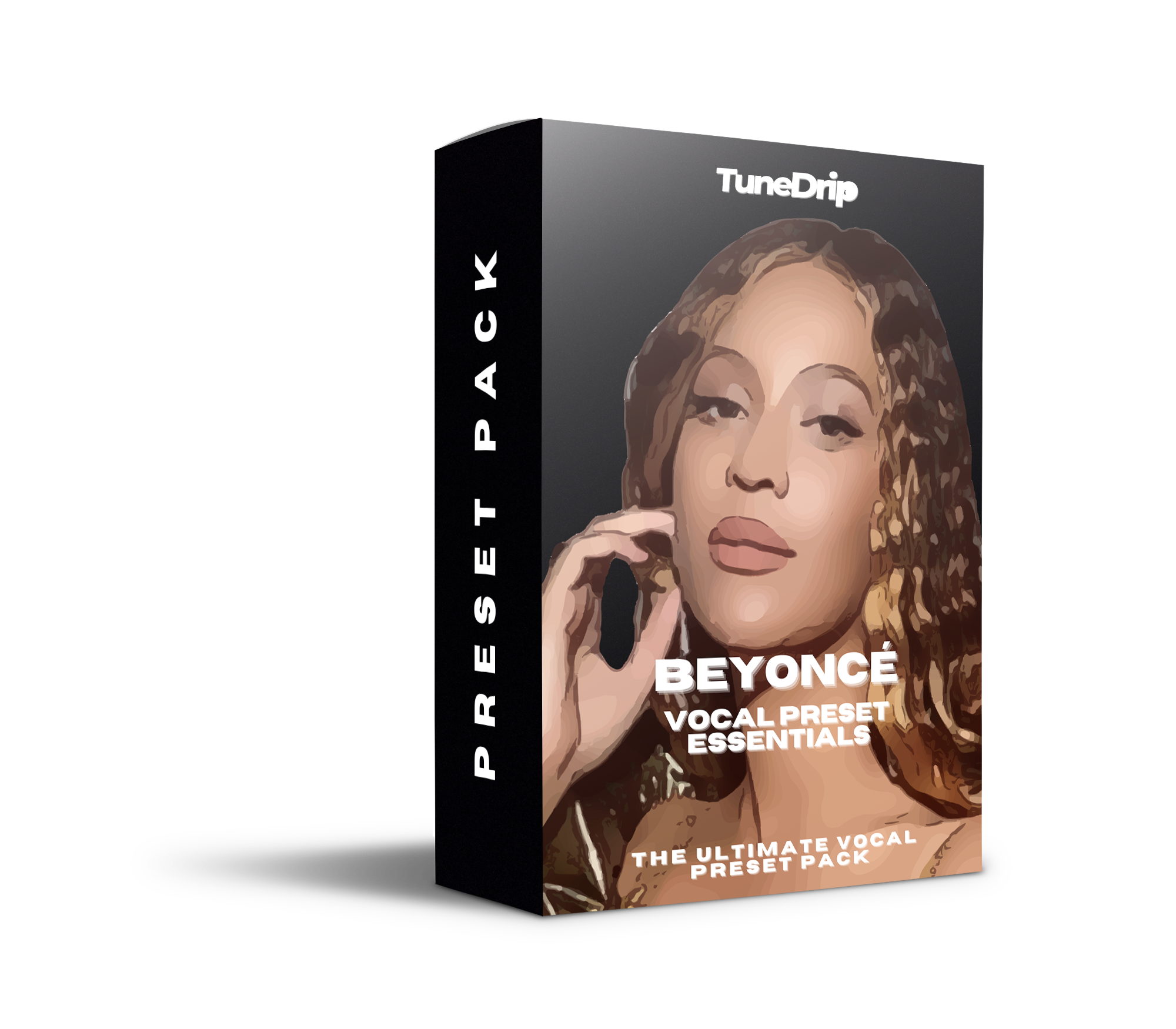
Want that signature reggaeton-trap vocal tone in your sessions? TuneDrip's Bad Bunny Vocal Preset Essentials has the chain dialed in. Or explore the full vocal presets collection for every artist and genre.



Leave a comment
This site is protected by hCaptcha and the hCaptcha Privacy Policy and Terms of Service apply.