
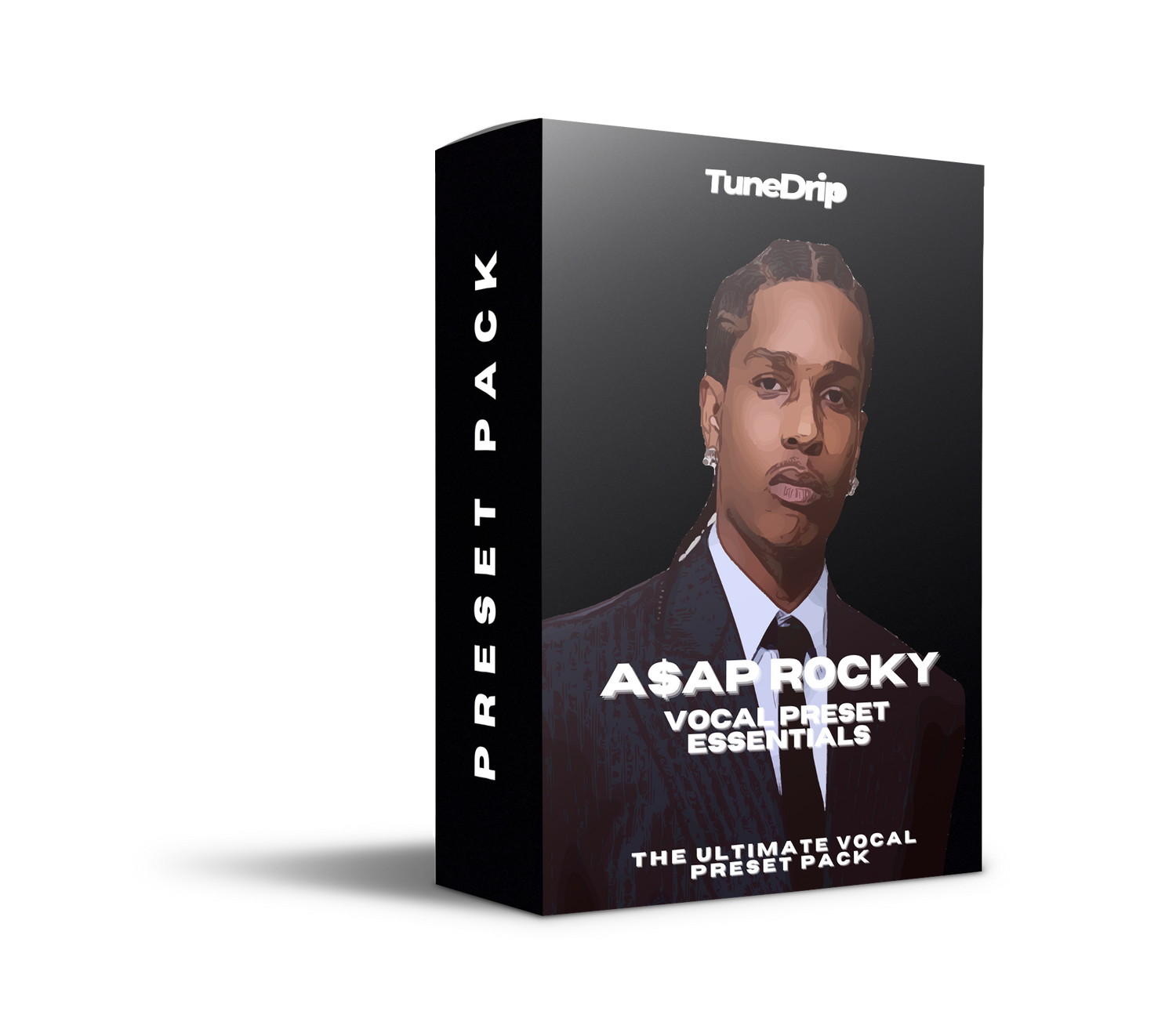
A$AP Rocky might be the most sonically adventurous rapper alive. While most artists find a vocal sound and stick with it, Rocky reinvents his vocal production every project. "LONG.LIVE.A$AP" sounds nothing like "Testing" which sounds nothing like "Don't Be Dumb." And each era works.
What stays consistent is his taste. Rocky's vocals always sound like they belong in the beat — never fighting it, never sitting on top of it, always integrated into the overall sonic picture. That's harder to achieve than it sounds, and it comes down to some very deliberate production choices.
A$AP Rocky's Approach to Vocal Production
He changes his vocal chain per song, not per album. This is important. Most artists (and most producers) have one vocal preset they use for everything. Rocky might have three different vocal treatments on the same project. "Praise the Lord" is dry, aggressive, minimal processing. "Sundress" is drenched in reverb with vintage character. "Babushka Boi" is somewhere in between. Each song gets its own chain built from scratch.
Auto-Tune is used creatively, not as a crutch. Rocky uses pitch correction on some tracks but never relies on it. When it's there (like on "Everyday" or "Tony Tone"), it's more of a texture than a correction tool — set around 15-25ms retune speed, adding a subtle digital sheen to his voice. On his raw rap tracks, it's completely absent.
Vintage texture is everywhere. Rocky has a known obsession with analog equipment and vintage sound. His vocals often run through tape saturation or vinyl emulation plugins that add subtle harmonic distortion, high-frequency roll-off, and a kind of "warmth" that digital recording lacks. It's never obvious, but A/B it and you'll hear the difference immediately.
Spatial effects are genre-defying. Rocky borrows reverb and delay approaches from psychedelic rock, shoegaze, and electronic music — not just hip-hop. His reverbs tend to be more "weird" than typical rap reverbs: longer tails, modulated, sometimes with pitch-shifted reflections. It's what gives tracks like "L$D" that trippy, otherworldly quality.
The Core Chain (adaptable per song)
- Tape saturation: Subtle analog warmth, adding harmonics and slight compression
- Auto-Tune (when used): 15-25ms, Humanize at 30-40. Texture, not correction
- Compression: Varies wildly. Aggressive tracks: 5:1, fast attack. Melodic tracks: 2:1, slow attack. Rocky adapts.
- EQ: High-pass at 80-100Hz, presence boost at 3-4kHz, vintage-style high-end roll-off above 14kHz (part of the analog aesthetic)
- De-esser: Moderate at 6-7kHz
- Reverb: Song-dependent. Could be anything from a tiny room to a massive modulated hall
- Delay: Often creative — ping-pong, tempo-synced, filtered. Another signature element
Presets
- LONG.LIVE Classic — The core A$AP sound: clean, confident, slightly vintage
- L$D Psychedelic — Trippy, long reverb, modulated delay, dreamy
- Praise the Lord Raw — Aggressive, dry, minimal processing, upfront
- Fashion Killa Smooth — The smoother, more melodic side with warm saturation
- Plus 6 more covering Rocky's full sonic range
All DAWs: FL Studio, Ableton, Logic Pro and more.
What Producers Can Learn From Rocky
Don't use the same chain on every song. This is the biggest takeaway. Your vocal preset should be a starting point that you customize for each track. The beat dictates the vocal treatment. An aggressive beat needs a tighter, dryer vocal. A spacey beat needs more reverb and warmth. Match the vocal processing to the song's mood.
Analog character doesn't require analog gear. There are excellent tape saturation and vinyl emulation plugins that add the warmth Rocky's vocals have. Try running your vocal through a subtle tape saturation plugin after compression — it rounds off the transients and adds harmonic complexity that makes everything sound more expensive.
Experiment with "wrong" effects. Rocky uses shoegaze reverbs on rap vocals. He uses electronic music delays on boom-bap beats. Part of his innovation comes from applying processing techniques from other genres. Don't limit yourself to "the way rap vocals are supposed to sound."
Download the A$AP Rocky Vocal Preset Essentials — 10 presets covering every era and mood. For more on building your own vocal chain from scratch, check our complete vocal chain guide.



Leave a comment
This site is protected by hCaptcha and the hCaptcha Privacy Policy and Terms of Service apply.